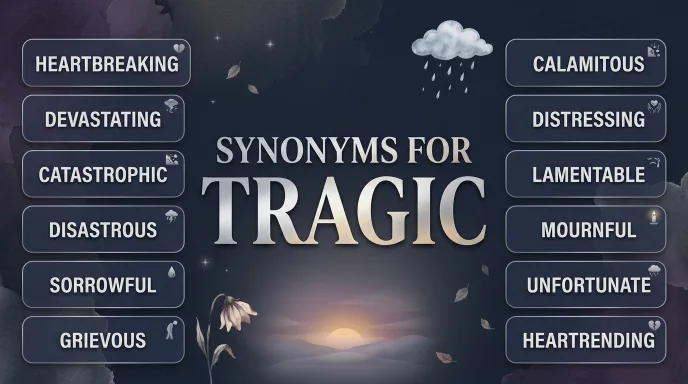
Synonyms for tragic include sad, heartbreaking, devastating, sorrowful, disastrous, and tragic in related uses. The best word depends on the event and how much pain or loss it caused. For example, a tragic accident may cause death or serious harm, while a heartbreaking story may cause deep sadness.
Learning synonyms for tragic helps you describe painful events with more care and detail. These words are useful for students, writers, bloggers, and English learners. You can use them in essays, stories, news reports, and daily talks.
This guide explains their meanings, pronunciation, examples, and common uses in simple English.
What Are Synonyms for Tragic?
Synonyms for tragic include heartbreaking, devastating, sorrowful, grievous, distressing, heartrending, disastrous, calamitous, mournful, and lamentable. These words describe events or situations that cause deep sadness, pain, suffering, or loss. Some are best for personal feelings, while others describe serious accidents, disasters, or major losses.
What Does Tragic Mean?
Definition
Tragic is an adjective that describes something very sad, painful, or marked by serious loss, suffering, or death.
Examples
- The family faced a tragic loss.
- It was a tragic accident that changed many lives.
Connotative Meaning
The word tragic carries a strong feeling of sadness, loss, and sorrow. It often describes events with serious consequences, such as death, disaster, or great suffering. It can also describe a sad story or a painful situation.
Etymology
Tragic comes from Latin tragicus, which came from Greek tragikos, meaning “of tragedy.” The word is linked to tragedy as a form of drama that often shows suffering or a terrible ending.
Pronunciation: US and UK IPA
- US: /ˈtrædʒɪk/
- UK: /ˈtrædʒɪk/
Syllables
trag-ic — 2 syllables.
Affixation Pattern
- Tragedy — noun: a very sad event or a type of serious drama.
- Tragic — adjective: causing or involving great sadness or suffering.
- Tragically — adverb: in a tragic or sadly unfortunate way.
Related Concepts
Words related to tragic include tragedy, grief, mourning, loss, sorrow, suffering, disaster, and misfortune. They connect to sadness and pain, but they do not all mean the same thing.
Complete Synonyms List for Tragic
| Synonym | Simple Meaning | Formality Level |
| 1. Heartbreaking | Causing deep sadness | Neutral |
| 2. Devastating | Causing great harm or emotional pain | Neutral |
| 3. Sorrowful | Full of sadness | Neutral |
| 4. Grievous | Very serious or painful | Formal |
| 5. Distressing | Causing worry or sadness | Neutral |
| 6. Heartrending | Causing intense emotional pain | Formal |
| 7. Disastrous | Causing great damage or failure | Neutral |
| 8. Calamitous | Causing serious damage or suffering | Formal |
| 9. Mournful | Showing deep sadness | Neutral |
| 10. Lamentable | Very sad or regrettable | Formal |
| 11. Devastatingly sad | Extremely sad or painful | Neutral |
| 12. Pitiful | Causing pity or sadness | Neutral |
| 13. Dreadful | Very bad or upsetting | Neutral |
| 14. Appalling | Shockingly bad or upsetting | Neutral |
| 15. Woeful | Full of sadness or trouble | Formal |
| 16. Miserable | Very unhappy or uncomfortable | Neutral |
| 17. Bleak | Without hope; grim | Neutral |
| 18. Unfortunate | Unlucky or marked by bad events | Neutral |
| 19. Dire | Extremely serious or worrying | Formal |
| 20. Calamitous | Involving a major disaster | Formal |
| 21. Grief-stricken | Overwhelmed by grief | Neutral |
| 22. Painful | Causing emotional or physical pain | Neutral |
| 23. Melancholy | Deeply sad or thoughtful | Formal |
| 24. Tragicomical | Mixing tragic and comic elements | Formal |
| 25. Catastrophic | Causing huge damage or loss | Formal |
Note: Some words above describe sadness or disaster more broadly than “tragic.” Choose the word that best matches the situation.
Formality Comparison: Synonyms for Tragic
Formal Synonyms
Use these in academic writing, serious reports, or formal discussions.
- Grievous: a grievous loss.
- Heartrending: a heartrending account.
- Calamitous: a calamitous event.
- Lamentable: a lamentable outcome.
- Dire: dire consequences.
Neutral Synonyms
These work in daily English, schoolwork, and general writing.
- Heartbreaking: a heartbreaking story.
- Devastating: devastating news.
- Distressing: a distressing event.
- Disastrous: a disastrous mistake.
- Painful: a painful memory.
Informal Expressions
These are common in everyday speech. They are not all exact synonyms for tragic.
- Really sad: “That is a really sad story.”
- Awful: “It was an awful day.”
- Terrible: “The news was terrible.”
- So upsetting: “That was so upsetting.”
- A total disaster: “The trip was a total disaster.”
25 Synonyms for Tragic: Meanings and Examples
1. Heartbreaking
Part of speech: Adjective
US IPA: /ˈhɑːrtˌbreɪkɪŋ/
UK IPA: /ˈhɑːtˌbreɪkɪŋ/
Formality: Neutral
Meaning: Causing deep sadness or emotional pain.
- Formal: The report gave a heartbreaking account of the family’s loss.
- Informal: It was heartbreaking to see her cry.
2. Devastating
Part of speech: Adjective
US IPA: /ˈdevəˌsteɪtɪŋ/
UK IPA: /ˈdevəˌsteɪtɪŋ/
Formality: Neutral
Meaning: Causing great damage, loss, or emotional pain.
- Formal: The devastating event affected the entire community.
- Informal: Hearing the news was devastating.
3. Sorrowful
Part of speech: Adjective
US IPA: /ˈsɑːroʊfəl/
UK IPA: /ˈsɒrəʊfəl/
Formality: Neutral
Meaning: Feeling or showing great sadness.
- Formal: The speaker gave a sorrowful account of the tragedy.
- Informal: She looked sorrowful after the bad news.
4. Grievous
Part of speech: Adjective
US IPA: /ˈɡriːvəs/
UK IPA: /ˈɡriːvəs/
Formality: Formal
Meaning: Very serious, painful, or harmful.
- Formal: The accident caused grievous injuries.
- Informal: Losing his home was a grievous blow.
5. Distressing
Part of speech: Adjective
US IPA: /dɪˈstresɪŋ/
UK IPA: /dɪˈstresɪŋ/
Formality: Neutral
Meaning: Causing worry, sadness, or emotional discomfort.
- Formal: The documentary showed distressing scenes of the disaster.
- Informal: That message was really distressing.
6. Heartrending
Part of speech: Adjective
US IPA: /ˈhɑːrtˌrendɪŋ/
UK IPA: /ˈhɑːtˌrendɪŋ/
Formality: Formal
Meaning: Causing very strong sadness or emotional pain.
- Formal: The novel tells a heartrending story of separation.
- Informal: Their goodbye was heartrending.
7. Disastrous
Part of speech: Adjective
US IPA: /dɪˈzæstrəs/
UK IPA: /dɪˈzɑːstrəs/
Formality: Neutral
Meaning: Causing great damage, harm, or failure.
- Formal: The region suffered a disastrous flood.
- Informal: Our first attempt was disastrous.
8. Calamitous
Part of speech: Adjective
US IPA: /kəˈlæmətəs/
UK IPA: /kəˈlæmətəs/
Formality: Formal
Meaning: Involving a serious disaster or major loss.
- Formal: The calamitous storm destroyed many homes.
- Informal: It was a calamitous day for the team.
9. Mournful
Part of speech: Adjective
US IPA: /ˈmɔːrnfəl/
UK IPA: /ˈmɔːnfəl/
Formality: Neutral
Meaning: Showing or expressing deep sadness, often after a loss.
- Formal: A mournful silence followed the announcement.
- Informal: He gave me a mournful look.
10. Lamentable
Part of speech: Adjective
US IPA: /ˈlæməntəbəl/
UK IPA: /ˈlæməntəbəl/
Formality: Formal
Meaning: Bad or sad enough to deserve regret.
- Formal: The report described a lamentable failure to protect the public.
- Informal: It was a lamentable end to a good plan.
11. Devastatingly Sad
Part of speech: Adjective phrase
US IPA: /ˈdevəˌsteɪtɪŋli sæd/
UK IPA: /ˈdevəˌsteɪtɪŋli sæd/
Formality: Neutral
Meaning: Extremely sad and emotionally painful.
- Formal: The film presents a devastatingly sad account of loss.
- Informal: That ending was devastatingly sad.
12. Pitiful
Part of speech: Adjective
US IPA: /ˈpɪtɪfəl/
UK IPA: /ˈpɪtɪfəl/
Formality: Neutral
Meaning: Causing pity or deserving sympathy; it can also mean very poor in quality.
- Formal: The report described the pitiful conditions after the disaster.
- Informal: The abandoned puppy looked pitiful.
13. Dreadful
Part of speech: Adjective
US IPA: /ˈdredfəl/
UK IPA: /ˈdredfəl/
Formality: Neutral
Meaning: Extremely bad, unpleasant, or upsetting.
- Formal: The town endured a dreadful period of hardship.
- Informal: We received some dreadful news.
14. Appalling
Part of speech: Adjective
US IPA: /əˈpɔːlɪŋ/
UK IPA: /əˈpɔːlɪŋ/
Formality: Neutral
Meaning: Shockingly bad or upsetting.
- Formal: The investigation revealed appalling conditions.
- Informal: It was appalling to see so much damage.
15. Woeful
Part of speech: Adjective
US IPA: /ˈwoʊfəl/
UK IPA: /ˈwəʊfəl/
Formality: Formal or literary
Meaning: Full of sorrow, misery, or trouble.
- Formal: The poem describes the woeful fate of the hero.
- Informal: He told us a woeful story about his lost phone.
16. Miserable
Part of speech: Adjective
US IPA: /ˈmɪzərəbəl/
UK IPA: /ˈmɪzərəbəl/
Formality: Neutral
Meaning: Very unhappy or uncomfortable.
- Formal: The families endured miserable conditions after the flood.
- Informal: I felt miserable after the argument.
17. Bleak
Part of speech: Adjective
US IPA: /bliːk/
UK IPA: /bliːk/
Formality: Neutral
Meaning: Without hope, comfort, or a positive outlook.
- Formal: The report presented a bleak picture of the region’s future.
- Informal: Things looked bleak after the team lost.
18. Unfortunate
Part of speech: Adjective
US IPA: /ʌnˈfɔːrtʃənət/
UK IPA: /ʌnˈfɔːtʃənət/
Formality: Neutral
Meaning: Unlucky or marked by an unwanted result.
- Formal: The incident was an unfortunate loss of life.
- Informal: It was unfortunate that we missed the train.
19. Dire
Part of speech: Adjective
US IPA: /ˈdaɪər/
UK IPA: /ˈdaɪə/
Formality: Formal
Meaning: Extremely serious, dangerous, or worrying.
- Formal: The report warned of dire consequences if aid did not arrive.
- Informal: We were in dire trouble after losing the keys.
20. Calamitous
Part of speech: Adjective
US IPA: /kəˈlæmətəs/
UK IPA: /kəˈlæmətəs/
Formality: Formal
Meaning: Causing great harm or disaster. This overlaps with “calamitous” in entry 8, so it is not a separate synonym and should not be counted twice.
- Formal: The calamitous event left the town in ruins.
- Informal: The whole plan turned calamitous.
21. Grief-Stricken
Part of speech: Adjective
US IPA: /ˈɡriːfˌstrɪkən/
UK IPA: /ˈɡriːfˌstrɪkən/
Formality: Neutral
Meaning: Overwhelmed by deep sadness, especially after someone’s death or a major loss.
- Formal: The grief-stricken family asked for privacy.
- Informal: He was grief-stricken after losing his friend.
22. Painful
Part of speech: Adjective
US IPA: /ˈpeɪnfəl/
UK IPA: /ˈpeɪnfəl/
Formality: Neutral
Meaning: Causing physical or emotional pain.
- Formal: The inquiry brought painful memories back to the survivors.
- Informal: It was painful to say goodbye.
23. Melancholy
Part of speech: Adjective or noun
US IPA: /ˈmelənˌkɑːli/
UK IPA: /ˈmelənkəli/
Formality: Literary or formal
Meaning: A deep, quiet sadness.
- Formal: The novel has a melancholy tone.
- Informal: I felt melancholy on the rainy afternoon.
24. Tragicomical
Part of speech: Adjective
US IPA: /ˌtrædʒɪˈkɑːmɪkəl/
UK IPA: /ˌtrædʒɪˈkɒmɪkəl/
Formality: Formal or literary
Meaning: Mixing tragic and comic elements. It is not a direct synonym for tragic because it also includes humor.
- Formal: The play uses a tragicomical style to explore human mistakes.
- Informal: The mix-up felt tragicomical after everyone calmed down.
25. Catastrophic
Part of speech: Adjective
US IPA: /ˌkætəˈstrɑːfɪk/
UK IPA: /ˌkætəˈstrɒfɪk/
Formality: Formal or neutral
Meaning: Causing extremely serious damage, loss, or harm.
- Formal: The earthquake had catastrophic effects on the region.
- Informal: Forgetting the tickets was catastrophic for our plans.
Prototype Meaning of Tragic
The central meaning of tragic is an event or situation that causes deep sorrow, serious suffering, or great loss. Death, severe injury, and life-changing disasters are common examples. The word can also describe a story with a deeply sad ending.
For example:
- Tragic: A fatal accident.
- Heartbreaking: A family saying goodbye to a loved one.
- Disastrous: A storm that destroys a town.
- Sorrowful: A person expressing deep grief.
These words overlap, but each highlights a different part of the experience.
Synonyms for Tragic by Category
For Deep Sadness
- Heartbreaking
- Heartrending
- Sorrowful
- Mournful
- Melancholy
Serious Harm or Loss
- Devastating
- Disastrous
- Calamitous
- Catastrophic
- Grievous
For Upsetting Events
- Distressing
- Appalling
- Dreadful
- Painful
- Lamentable
Hopeless or Difficult Situations
- Bleak
- Dire
- Miserable
- Woeful
- Unfortunate
Grief After a Loss
- Grief-stricken
- Mournful
- Heartbreaking
- Sorrowful
- Heartrending
Antonyms of Tragic
Antonyms are words with opposite meanings. The best opposite depends on the context.
- Happy: Feeling joy or pleasure.
- Joyful: Full of happiness.
- Fortunate: Having good luck.
- Hopeful: Expecting a good result.
- Successful: Achieving a desired result.
- Wonderful: Extremely good or pleasing.
Example: A tragic ending brings sorrow, while a happy ending brings joy.
Quiz: Test Your Knowledge of Synonyms for Tragic
Choose the best answer for each question.
1. Which word means “causing deep emotional pain”?
A. Hopeful
B. Heartbreaking
C. Fortunate
D. Cheerful
2. Which synonym best describes an event that causes huge damage?
A. Melancholy
B. Mournful
C. Catastrophic
D. Joyful
3. What does “sorrowful” mean?
A. Full of sadness
B. Full of energy
C. Very successful
D. Lucky
4. Which word means “extremely serious or worrying”?
A. Wonderful
B. Dire
C. Playful
D. Hopeful
5. Which word best describes someone overwhelmed by grief?
A. Grief-stricken
B. Successful
C. Fortunate
D. Cheerful
6. Which word mixes tragic and comic elements?
A. Disastrous
B. Tragicomical
C. Heartbreaking
D. Grievous
Answer Key
- B — Heartbreaking
- C — Catastrophic
- A — Full of sadness
- B — Dire
- A — Grief-stricken
- B — Tragicomical
Usage Tips for Synonyms for Tragic
- Use “heartbreaking” when you want to focus on emotional pain.
- Use “devastating” for severe loss or a strong emotional effect.
- Use “disastrous” for events with serious damage or failure.
- Use “sorrowful” to describe a person, voice, or mood filled with sadness.
- Use “grievous” for serious injuries, losses, or harm.
- Use “catastrophic” for events with extremely large or severe consequences.
Always think about the context before choosing a synonym. A sad story may be heartbreaking, but a destructive earthquake is more likely to be called catastrophic.
FAQs About Synonyms for Tragic
1. What are the best synonyms for tragic?
Some useful synonyms are heartbreaking, devastating, sorrowful, heartrending, distressing, and grievous. The best choice depends on the kind of sadness or loss you want to describe.
2. What is another word for tragic?
Heartbreaking is a common alternative when you mean something causes deep sadness. Use disastrous when you mean an event causes great damage or failure.
3. What is a simple synonym for tragic?
Very sad is a simple phrase that explains the basic meaning of tragic. “Heartbreaking” is another common choice.
4. What is a formal synonym for tragic?
Grievous, lamentable, and calamitous are formal alternatives. They are useful in serious reports and formal writing.
5. Is heartbreaking the same as tragic?
The words are close, but they focus on different things. Heartbreaking highlights emotional pain, while tragic often describes an event involving serious suffering or loss.
6. What is the opposite of tragic?
Common antonyms include happy, joyful, fortunate, and hopeful. The right opposite depends on the sentence.
7. Can I use disastrous instead of tragic?
Sometimes. Disastrous focuses on great damage or failure, while tragic often emphasizes sorrow, suffering, or death.
8. What is the noun form of tragic?
The noun form is tragedy. For example, “The accident was tragic” uses the adjective, while “The accident was a tragedy” uses the noun.
Conclusion
Learning synonyms for tragic can help you describe sad events, serious losses, and painful feelings more clearly. Words like heartbreaking, devastating, sorrowful, grievous, and heartrending can add detail to your writing.
Other words, such as disastrous and catastrophic, focus more on damage and serious consequences. Remember that these words are related, but they are not always interchangeable.
Choose a word that fits the event and the feeling you want to express. With practice, you can use synonyms for tragic in school essays, stories, reports, and everyday English. Try the quiz and example sentences to build your vocabulary and improve your word choice.
Discover More Articles:

Hi, I’m Emma Wilson, an English vocabulary writer helping learners improve their word skills with synonyms, meanings, examples, and quizzes. I create simple resources to make English learning easier.