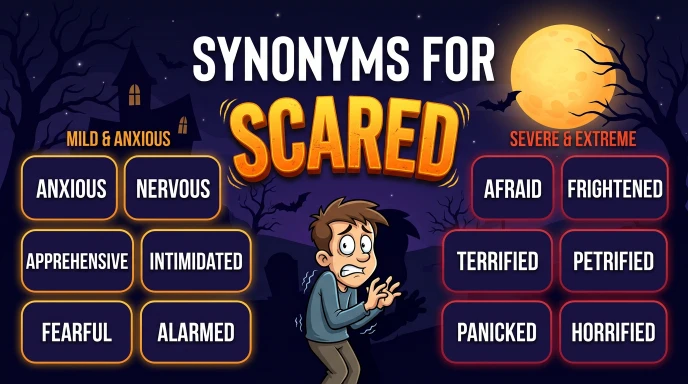
Synonyms for scared include afraid, frightened, terrified, fearful, nervous, anxious, alarmed, and horrified.
These words describe different levels and types of fear. Some express mild worry, while others show intense fear or shock. Learning these alternatives can help you speak and write more clearly. Students, English learners, bloggers, and content writers can use them to avoid repeating the word “scared.”
This guide explains 25 useful synonyms with simple meanings, pronunciation, and examples. You will also learn how to choose the right word for formal writing, everyday conversations, and different situations.
Synonyms for Scared
The most common synonyms for scared are afraid, frightened, terrified, fearful, nervous, anxious, alarmed, panicked, horrified, and intimidated. These words describe fear, worry, or a sense of danger. The best choice depends on the strength of the feeling and the situation.
Meaning of Scared
Definition
Scared is an adjective that describes a person who feels fear, worry, or concern because of a possible danger, threat, or unpleasant situation.
Examples
- The child was scared of the dark.
- I felt scared when I heard a strange noise.
Connotative Meaning
The word scared usually has a negative emotional meaning. It can describe mild worry, strong fear, or a sudden reaction to danger.
Etymology
Scared comes from the verb scare, which developed from an Old Norse word meaning to frighten or terrify.
Pronunciation
- US IPA: /skerd/
- UK IPA: /skeəd/
Syllables
Scared has one syllable.
Affixation Pattern
Scared is formed from the base verb scare with the suffix ed. The suffix creates the past tense form and can also form an adjective describing someone affected by fear.
Related Concepts
- Fear: An emotional response to danger.
- Anxiety: Worry about a possible problem.
- Panic: Sudden and intense fear.
- Courage: The ability to face fear.
- Phobia: An intense or unreasonable fear of something.
Complete List of 25 Synonyms for Scared
| Synonym | Simple Meaning | Formality Level |
| 1. Afraid | Feeling fear | Neutral |
| 2. Frightened | Feeling sudden fear | Neutral |
| 3. Terrified | Extremely afraid | Neutral |
| 4. Fearful | Full of fear | Formal |
| 5. Nervous | Worried or uneasy | Neutral |
| 6. Anxious | Feeling worried or uneasy | Neutral |
| 7. Alarmed | Suddenly worried by danger | Neutral |
| 8. Panicked | Overcome by sudden fear | Neutral |
| 9. Horrified | Filled with shock and fear | Neutral |
| 10. Petrified | Too frightened to move | Neutral |
| 11. Intimidated | Made to feel afraid or less confident | Neutral |
| 12. Frightened stiff | Extremely frightened | Informal |
| 13. Spooked | Suddenly frightened | Informal |
| 14. Startled | Suddenly surprised or frightened | Neutral |
| 15. Shaken | Emotionally upset after a frightening event | Neutral |
| 16. Apprehensive | Worried about something ahead | Formal |
| 17. Timid | Easily frightened or shy | Neutral |
| 18. Cowed | Made fearful or submissive | Formal |
| 19. Daunted | Made to feel afraid of a challenge | Neutral |
| 20. Distressed | Deeply upset or worried | Neutral |
| 21. Trepidatious | Feeling fear about what may happen | Formal |
| 22. Scared stiff | So frightened that movement feels difficult | Informal |
| 23. Panic stricken | Overcome with extreme panic | Formal |
| 24. Insecure | Lacking confidence or feeling unsafe | Neutral |
| 25. Shy | Nervous or uncomfortable around others | Neutral |
Note: Some words describe related feelings rather than fear itself. For example, shy often describes social discomfort, while insecure usually describes a lack of confidence or safety.
Formality Comparison of Scared Synonyms
Different synonyms for scared fit different situations. Use these comparisons to choose the right word.
| Word | Formality | Best Use |
| Afraid | Neutral | Daily conversation |
| Frightened | Neutral | General writing |
| Terrified | Neutral | Strong fear |
| Apprehensive | Formal | Professional writing |
| Trepidatious | Formal | Careful or academic writing |
| Spooked | Informal | Casual conversation |
| Scared stiff | Informal | Everyday speech |
| Alarmed | Neutral | Sudden danger |
| Intimidated | Neutral | Pressure or authority |
| Panic stricken | Formal | Serious or dramatic situations |
Detailed Synonyms for Scared
1. Afraid
Part of Speech: Adjective
US IPA: /əˈfreɪd/
UK IPA: /əˈfreɪd/
Meaning: Feeling fear because of danger or an unpleasant situation.
Formality: Neutral
Formal Example: The witness was afraid to speak during the investigation.
Informal Example: I’m afraid of big dogs.
2. Frightened
Part of Speech: Adjective
US IPA: /ˈfraɪtənd/
UK IPA: /ˈfraɪtənd/
Meaning: Feeling fear after seeing or hearing something frightening.
Formality: Neutral
Formal Example: The frightened passengers waited for help.
Informal Example: My little brother looked frightened during the storm.
3. Terrified
Part of Speech: Adjective
US IPA: /ˈterəˌfaɪd/
UK IPA: /ˈterɪfaɪd/
Meaning: Feeling extremely strong fear.
Formality: Neutral
Formal Example: The residents were terrified by the sudden explosion.
Informal Example: I was terrified when the lights went out.
4. Fearful
Part of Speech: Adjective
US IPA: /ˈfɪrfəl/
UK IPA: /ˈfɪəfəl/
Meaning: Experiencing fear or expecting something bad to happen.
Formality: Formal
Formal Example: The fearful crowd moved away from the damaged building.
Informal Example: She felt fearful about walking home alone.
5. Nervous
Part of Speech: Adjective
US IPA: /ˈnɝːvəs/
UK IPA: /ˈnɜːvəs/
Meaning: Feeling worried, uneasy, or afraid about something.
Formality: Neutral
Formal Example: The nervous candidate prepared carefully for the interview.
Informal Example: I’m nervous about my driving test.
6. Anxious
Part of Speech: Adjective
US IPA: /ˈæŋkʃəs/
UK IPA: /ˈæŋkʃəs/
Meaning: Feeling worried or uneasy about a possible problem.
Formality: Neutral
Formal Example: Parents were anxious about their children’s safety.
Informal Example: I’m anxious about tomorrow’s exam.
7. Alarmed
Part of Speech: Adjective
US IPA: /əˈlɑːrmd/
UK IPA: /əˈlɑːmd/
Meaning: Suddenly feeling fear or concern because of danger.
Formality: Neutral
Formal Example: The staff became alarmed when the fire alarm sounded.
Informal Example: I was alarmed by that strange noise.
8. Panicked
Part of Speech: Adjective
US IPA: /ˈpænɪkt/
UK IPA: /ˈpænɪkt/
Meaning: Feeling sudden, uncontrolled fear.
Formality: Neutral
Formal Example: The panicked passengers rushed toward the exit.
Informal Example: I panicked when I lost my phone.
9. Horrified
Part of Speech: Adjective
US IPA: /ˈhɔːrəˌfaɪd/
UK IPA: /ˈhɒrɪfaɪd/
Meaning: Feeling intense shock, fear, or disgust.
Formality: Neutral
Formal Example: The community was horrified by the violent incident.
Informal Example: I was horrified when I saw the damage.
10. Petrified
Part of Speech: Adjective
US IPA: /ˈpetrəˌfaɪd/
UK IPA: /ˈpetrɪfaɪd/
Meaning: So frightened that you feel unable to move.
Formality: Neutral
Formal Example: The child stood petrified during the emergency.
Informal Example: I’m petrified of snakes.
11. Intimidated
Part of Speech: Adjective
US IPA: /ɪnˈtɪməˌdeɪtɪd/
UK IPA: /ɪnˈtɪmɪdeɪtɪd/
Meaning: Feeling afraid or less confident because of someone or something powerful.
Formality: Neutral
Formal Example: New employees felt intimidated by the strict manager.
Informal Example: Don’t feel intimidated by the difficult questions.
12. Frightened Stiff
Part of Speech: Informal phrase
US IPA: /ˈfraɪtənd stɪf/
UK IPA: /ˈfraɪtənd stɪf/
Meaning: Extremely frightened.
Formality: Informal
Formal Example: The witness was extremely frightened after the incident.
Informal Example: I was frightened stiff by the sudden scream.
13. Spooked
Part of Speech: Adjective
US IPA: /spuːkt/
UK IPA: /spuːkt/
Meaning: Suddenly frightened or made uneasy.
Formality: Informal
Formal Example: The sudden movement left the animal visibly frightened.
Informal Example: That strange shadow spooked me.
14. Startled
Part of Speech: Adjective
US IPA: /ˈstɑːrtəld/
UK IPA: /ˈstɑːtld/
Meaning: Suddenly surprised or frightened by an unexpected event.
Formality: Neutral
Formal Example: The guard was startled by the unexpected sound.
Informal Example: You startled me when you came in!
15. Shaken
Part of Speech: Adjective
US IPA: /ˈʃeɪkən/
UK IPA: /ˈʃeɪkən/
Meaning: Emotionally upset after a frightening or shocking experience.
Formality: Neutral
Formal Example: The driver was badly shaken after the accident.
Informal Example: I’m still shaken by what happened last night.
16. Apprehensive
Part of Speech: Adjective
US IPA: /ˌæprɪˈhensɪv/
UK IPA: /ˌæprɪˈhensɪv/
Meaning: Worried or fearful about something that may happen.
Formality: Formal
Formal Example: The team was apprehensive about the upcoming inspection.
Informal Example: I’m apprehensive about meeting everyone tomorrow.
17. Timid
Part of Speech: Adjective
US IPA: /ˈtɪmɪd/
UK IPA: /ˈtɪmɪd/
Meaning: Shy and easily frightened or lacking confidence.
Formality: Neutral
Formal Example: The timid student hesitated to speak before the class.
Informal Example: The timid puppy hid behind its owner.
18. Cowed
Part of Speech: Adjective
US IPA: /kaʊd/
UK IPA: /kaʊd/
Meaning: Made afraid or less confident by pressure or threats.
Formality: Formal
Formal Example: The workers were cowed by the manager’s threats.
Informal Example: He looked cowed after the argument.
19. Daunted
Part of Speech: Adjective
US IPA: /ˈdɔːntɪd/
UK IPA: /ˈdɔːntɪd/
Meaning: Feeling discouraged or afraid because something seems difficult.
Formality: Neutral
Formal Example: The students were not daunted by the challenging assignment.
Informal Example: I felt daunted by the huge task.
20. Distressed
Part of Speech: Adjective
US IPA: /dɪˈstrest/
UK IPA: /dɪˈstrest/
Meaning: Feeling very upset, worried, or troubled.
Formality: Neutral
Formal Example: The family was distressed by the unexpected news.
Informal Example: She looked distressed after the phone call.
21. Trepidatious
Part of Speech: Adjective
US IPA: /ˌtrepɪˈdeɪʃəs/
UK IPA: /ˌtrepɪˈdeɪʃəs/
Meaning: Feeling nervous or fearful about something that may happen.
Formality: Formal
Formal Example: The researchers were trepidatious about presenting their findings.
Informal Example: I felt trepidatious before my first flight.
22. Scared Stiff
Part of Speech: Informal phrase
US IPA: /ˌskerd ˈstɪf/
UK IPA: /ˌskeəd ˈstɪf/
Meaning: Extremely frightened and almost unable to move.
Formality: Informal
Formal Example: The witness was too frightened to respond.
Informal Example: I was scared stiff when the dog barked.
23. Panic Stricken
Part of Speech: Adjective
US IPA: /ˈpænɪk ˌstrɪkən/
UK IPA: /ˈpænɪk ˌstrɪkən/
Meaning: Overcome by sudden and extreme fear.
Formality: Formal
Formal Example: The panic stricken crowd struggled to leave the building.
Informal Example: He looked panic stricken when he couldn’t find his child.
24. Insecure
Part of Speech: Adjective
US IPA: /ˌɪnsɪˈkjʊr/
UK IPA: /ˌɪnsɪˈkjʊə/
Meaning: Feeling uncertain, unsafe, or lacking confidence.
Formality: Neutral
Formal Example: The insecure employee worried about losing her position.
Informal Example: I feel insecure when I speak in front of a crowd.
25. Shy
Part of Speech: Adjective
US IPA: /ʃaɪ/
UK IPA: /ʃaɪ/
Meaning: Feeling nervous or uncomfortable around other people.
Formality: Neutral
Formal Example: The shy participant avoided speaking during the meeting.
Informal Example: My little sister is shy around strangers.
Prototype Meaning of Scared
A prototype is the clearest or most typical example of a concept. For the word scared, the prototype is a person who feels fear after noticing a possible danger.
For example, imagine a child hearing a loud noise in a dark room. The child may feel afraid, frightened, or alarmed. These reactions show the basic meaning of scared.
Synonyms for Scared by Category
Different situations need different words. Here are useful alternatives grouped by the type of fear.
Mild Fear or Worry
- Nervous
- Anxious
- Apprehensive
- Uneasy
Strong Fear
- Terrified
- Petrified
- Horrified
- Panic stricken
Sudden Fear
- Startled
- Alarmed
- Spooked
- Panicked
Fear Caused by Pressure
- Intimidated
- Cowed
- Daunted
- Timid
Emotional Distress
- Shaken
- Distressed
- Fearful
- Insecure
Antonyms of Scared
Antonyms are words with opposite meanings. These words describe courage, confidence, or freedom from fear.
| Antonym | Meaning |
| Brave | Ready to face danger |
| Fearless | Without fear |
| Courageous | Showing courage |
| Confident | Feeling sure about yourself |
| Bold | Willing to take risks |
| Calm | Peaceful and relaxed |
| Relaxed | Free from tension |
| Unafraid | Not feeling fear |
| Daring | Willing to do something risky |
| Composed | Calm and in control |
Quiz: Test Your Knowledge of Scared Synonyms
Choose the best answer for each question.
1. Which word means extremely frightened?
A. Calm
B. Terrified
C. Confident
D. Relaxed
2. Which synonym describes someone worried about a future event?
A. Apprehensive
B. Fearless
C. Bold
D. Cheerful
3. Which word means suddenly frightened by an unexpected sound?
A. Relaxed
B. Startled
C. Courageous
D. Confident
4. Which word describes someone made afraid by another person’s power or behavior?
A. Intimidated
B. Joyful
C. Daring
D. Peaceful
5. Which informal phrase means extremely frightened?
A. Feeling calm
B. Scared stiff
C. Feeling proud
D. Staying relaxed
6. Which word describes someone who is easily frightened and shy?
A. Bold
B. Timid
C. Fearless
D. Strong
Answer Key
- B. Terrified
- A. Apprehensive
- B. Startled
- A. Intimidated
- B. Scared stiff
- B. Timid
Usage Tips: How to Use Scared Synonyms
Follow these tips to choose the right synonym in your writing and speech.
- Use afraid for general fear in everyday conversations.
- Choose terrified when someone experiences very strong fear.
- Use nervous for worry before an exam, interview, or performance.
- Choose alarmed when someone notices a possible danger.
- Use apprehensive in formal writing about future concerns.
- Choose spooked for sudden fear in casual conversations.
- Use intimidated when a person or situation makes someone feel less confident.
- Choose petrified to describe extreme fear that seems to stop someone from moving.
Remember: Not every synonym works in every sentence. Consider the situation and the strength of the emotion before choosing a replacement.
FAQs About Synonyms for Scared
1. What are the most common synonyms for scared?
The most common synonyms are afraid, frightened, terrified, fearful, nervous, and anxious. These words describe different levels of fear and worry.
2. What is a stronger word for scared?
Terrified and petrified are stronger alternatives to scared. Both describe an intense level of fear.
3. What is a formal synonym for scared?
Apprehensive, fearful, and trepidatious can be used in formal writing. They often describe worry or fear about something that may happen.
4. What is an informal word for scared?
Spooked is a common informal alternative. Phrases such as scared stiff are also used in everyday conversations.
5. What is the difference between scared and afraid?
Both words describe fear and often have the same meaning. Scared is common in everyday speech, while afraid can also sound natural in more formal sentences.
6. What is the opposite of scared?
Common antonyms include brave, fearless, courageous, confident, and unafraid. These words describe a lack of fear or the ability to face danger.
7. Can nervous be used as a synonym for scared?
Yes, nervous can replace scared when someone feels worried or uneasy. However, nervous usually describes mild fear or tension rather than extreme fear.
Conclusion
Learning synonyms for scared helps you express fear in a clearer and more interesting way. Words such as afraid, frightened, terrified, nervous, anxious, and alarmed can describe different emotional situations.
Strong words like petrified and panic stricken express intense fear, while apprehensive and uneasy describe worry about something that may happen. Some alternatives, such as spooked and scared stiff, are more suitable for casual conversations.
Choose your words based on the situation and the level of fear you want to express. Practice these synonyms in sentences to improve your vocabulary, writing skills, and everyday English communication.
Discover More Articles:

Hi, I’m Emma Wilson, an English vocabulary writer helping learners improve their word skills with synonyms, meanings, examples, and quizzes. I create simple resources to make English learning easier.