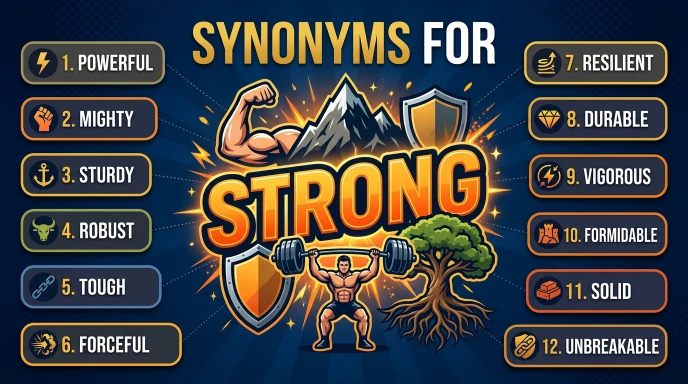
Synonyms for strong include powerful, sturdy, tough, robust, mighty, durable, solid, resilient, forceful, and muscular.
These words describe physical strength, mental determination, powerful effects, or something that can withstand pressure. However, each alternative has a slightly different meaning. Some describe a person’s body, while others express emotional strength, strong arguments, or durable objects.
Learning different ways to say strong can make your English more natural and expressive. Students, English learners, bloggers, and content writers can use these alternatives in essays, conversations, stories, and professional writing. This guide explains 25 useful synonyms with simple meanings, pronunciation, and practical examples.
Meaning of Strong
Definition
Strong is an adjective that describes someone or something with great physical power, mental determination, or the ability to resist force, pressure, or damage. It can also describe powerful feelings, convincing arguments, and intense effects.
Examples
- The strong athlete lifted the heavy weight easily.
- She remained strong during a difficult period in her life.
Connotative Meaning
The word strong usually has a positive meaning. It can suggest power, confidence, courage, stability, and determination.
- Physical strength: A strong person can lift heavy objects.
- Mental strength: A strong person can handle difficult situations.
- Emotional strength: Someone can remain calm during stressful times.
- Object strength: A strong material can resist pressure or damage.
- Argument strength: A strong argument is convincing and well supported.
Etymology
The word strong comes from Old English strang, meaning powerful, firm, or having great physical force. It is related to similar words in other Germanic languages.
Pronunciation
- US IPA: /strɔːŋ/
- UK IPA: /strɒŋ/
Syllables
Strong: 1 syllable.
Affixation Pattern
Strong is a base adjective in modern English. It forms several related words:
- Stronger: Strong + er
- Strongest: Strong + est
- Strongly: Strong + ly
- Strength: Related noun form
- Strengthen: Strength + en
Related Concepts
- Power: The ability to control, influence, or perform an action.
- Strength: The quality of being physically or mentally strong.
- Endurance: The ability to continue despite difficulty.
- Resilience: The ability to recover after challenges.
- Determination: The decision to continue working toward a goal.
Complete Synonyms List for Strong
Here are 25 useful synonyms for strong, with their meanings and formality levels.
| Synonym | Meaning | Formality Level |
| 1. Powerful | Having great power or influence | Neutral |
| 2. Sturdy | Strongly built and unlikely to break | Neutral |
| 3. Tough | Able to withstand difficulty or damage | Informal |
| 4. Robust | Strong, healthy, and able to work well | Formal |
| 5. Mighty | Having great strength or power | Neutral |
| 6. Durable | Able to last a long time without damage | Neutral |
| 7. Solid | Firm, stable, and dependable | Neutral |
| 8. Resilient | Able to recover from difficulties | Formal |
| 9. Forceful | Expressing power or determination | Neutral |
| 10. Muscular | Having well developed muscles | Neutral |
| 11. Vigorous | Full of energy and physical strength | Formal |
| 12. Hardy | Able to survive difficult conditions | Neutral |
| 13. Firm | Stable, steady, or not easily changed | Neutral |
| 14. Intense | Very powerful or extreme in degree | Neutral |
| 15. Potent | Having a powerful effect or influence | Formal |
| 16. Formidable | Inspiring respect or fear because of strength | Formal |
| 17. Stalwart | Loyal, dependable, and strong | Formal |
| 18. Unyielding | Refusing to give up or change | Formal |
| 19. Steadfast | Firm and determined in beliefs or actions | Formal |
| 20. Unbreakable | Impossible or very difficult to break | Neutral |
| 21. Invincible | Impossible to defeat | Neutral |
| 22. Hard wearing | Able to withstand frequent use | Neutral |
| 23. Resolved | Firmly determined to do something | Formal |
| 24. Energetic | Having a lot of energy and activity | Neutral |
| 25. Stout | Strongly built or physically sturdy | Neutral |
Note: These words describe different types of strength. For example, muscular refers to physical development, resilient describes recovery from difficulty, and potent refers to powerful effects.
Formality Comparison of Strong Synonyms
Different alternatives to strong are suitable for different writing situations.
| Formality | Synonyms | Common Use |
| Formal | Robust, resilient, vigorous, potent, formidable, steadfast | Reports and professional writing |
| Neutral | Powerful, sturdy, durable, solid, firm, mighty | General writing and conversation |
| Informal | Tough, stout | Casual conversations |
Writing tip: Use powerful for great influence, sturdy for solid construction, resilient for mental strength, and durable for long lasting objects.
Detailed Synonyms for Strong
1. Powerful
Part of Speech: Adjective
US IPA: /ˈpaʊərfəl/
UK IPA: /ˈpaʊəfəl/
Meaning: Having great physical force, influence, or ability to produce an effect.
Formality: Neutral
Formal Example: The organization has a powerful influence on international policy.
Informal Example: She gave a powerful speech at the event.
2. Sturdy
Part of Speech: Adjective
US IPA: /ˈstɜːrdi/
UK IPA: /ˈstɜːdi/
Meaning: Strongly built and able to withstand pressure or damage.
Formality: Neutral
Formal Example: The engineers selected sturdy materials for the construction project.
Informal Example: This sturdy table can hold all my books.
3. Tough
Part of Speech: Adjective
US IPA: /tʌf/
UK IPA: /tʌf/
Meaning: Able to deal with difficult situations, pressure, or physical damage.
Formality: Informal
Formal Example: The team demonstrated a tough attitude throughout the competition.
Informal Example: My grandfather is a tough man who never gives up.
4. Robust
Part of Speech: Adjective
US IPA: /roʊˈbʌst/
UK IPA: /rəʊˈbʌst/
Meaning: Strong, healthy, and able to withstand difficult conditions.
Formality: Formal
Formal Example: The company developed a robust system to protect customer information.
Informal Example: He has a robust build and enjoys outdoor activities.
5. Mighty
Part of Speech: Adjective
US IPA: /ˈmaɪti/
UK IPA: /ˈmaɪti/
Meaning: Having great strength, power, or influence.
Formality: Neutral
Formal Example: The mighty river has shaped the surrounding landscape for centuries.
Informal Example: The mighty athlete won the competition.
6. Durable
Part of Speech: Adjective
US IPA: /ˈdʊrəbəl/
UK IPA: /ˈdjʊərəbəl/
Meaning: Able to last a long time without becoming damaged.
Formality: Neutral
Formal Example: The manufacturer uses durable materials to improve product quality.
Informal Example: I bought a durable backpack for school.
7. Solid
Part of Speech: Adjective
US IPA: /ˈsɑːlɪd/
UK IPA: /ˈsɒlɪd/
Meaning: Firm, stable, and not easily damaged or moved.
Formality: Neutral
Formal Example: The building stands on a solid foundation.
Informal Example: We need a solid table for the kitchen.
8. Resilient
Part of Speech: Adjective
US IPA: /rɪˈzɪliənt/
UK IPA: /rɪˈzɪliənt/
Meaning: Able to recover quickly from difficulties, pressure, or setbacks.
Formality: Formal
Formal Example: The community remained resilient after the natural disaster.
Informal Example: She is resilient and always finds a way to move forward.
9. Forceful
Part of Speech: Adjective
US IPA: /ˈfɔːrsfəl/
UK IPA: /ˈfɔːsfəl/
Meaning: Expressing great power, energy, or determination.
Formality: Neutral
Formal Example: The speaker delivered a forceful argument in support of the proposal.
Informal Example: He made a forceful effort to open the stuck door.
10. Muscular
Part of Speech: Adjective
US IPA: /ˈmʌskjələr/
UK IPA: /ˈmʌskjələ/
Meaning: Having large or well developed muscles.
Formality: Neutral
Formal Example: The athlete followed a training program to develop a muscular physique.
Informal Example: The muscular man carried the heavy boxes.
11. Vigorous
Part of Speech: Adjective
US IPA: /ˈvɪɡərəs/
UK IPA: /ˈvɪɡərəs/
Meaning: Full of energy, strength, and physical activity.
Formality: Formal
Formal Example: The researchers conducted a vigorous investigation into the issue.
Informal Example: She enjoys a vigorous workout every morning.
12. Hardy
Part of Speech: Adjective
US IPA: /ˈhɑːrdi/
UK IPA: /ˈhɑːdi/
Meaning: Able to survive difficult conditions or withstand hardship.
Formality: Neutral
Formal Example: These hardy plants can survive in cold weather.
Informal Example: My hardy dog loves playing outside in winter.
13. Firm
Part of Speech: Adjective
US IPA: /fɜːrm/
UK IPA: /fɜːm/
Meaning: Stable, steady, or not easily changed or moved.
Formality: Neutral
Formal Example: The manager maintained a firm position during the negotiations.
Informal Example: She gave me a firm handshake.
14. Intense
Part of Speech: Adjective
US IPA: /ɪnˈtens/
UK IPA: /ɪnˈtens/
Meaning: Very powerful, extreme, or strong in degree.
Formality: Neutral
Formal Example: The region experienced intense competition among local businesses.
Informal Example: We had an intense discussion about the final decision.
15. Potent
Part of Speech: Adjective
US IPA: /ˈpoʊtənt/
UK IPA: /ˈpəʊtənt/
Meaning: Having a powerful effect or influence.
Formality: Formal
Formal Example: Education can be a potent tool for social change.
Informal Example: That cleaning product has a potent smell.
16. Formidable
Part of Speech: Adjective
US IPA: /ˈfɔːrmɪdəbəl/
UK IPA: /ˈfɔːmɪdəbəl/
Meaning: Very powerful, impressive, or difficult to overcome.
Formality: Formal
Formal Example: The company faced a formidable challenge in the international market.
Informal Example: She is a formidable opponent in chess.
17. Stalwart
Part of Speech: Adjective
US IPA: /ˈstɔːlwərt/
UK IPA: /ˈstɔːlwət/
Meaning: Strong, loyal, and dependable, especially during difficult situations.
Formality: Formal
Formal Example: The organization depends on its stalwart supporters.
Informal Example: He has been a stalwart friend throughout my life.
18. Unyielding
Part of Speech: Adjective
US IPA: /ʌnˈjiːldɪŋ/
UK IPA: /ʌnˈjiːldɪŋ/
Meaning: Refusing to give up, surrender, or change an opinion.
Formality: Formal
Formal Example: The negotiator remained unyielding during the discussions.
Informal Example: She showed unyielding determination while preparing for the exam.
19. Steadfast
Part of Speech: Adjective
US IPA: /ˈstedfæst/
UK IPA: /ˈstedfɑːst/
Meaning: Firm, loyal, and determined in beliefs, decisions, or actions.
Formality: Formal
Formal Example: The leader remained steadfast in supporting educational reform.
Informal Example: My parents have always been steadfast in their support.
20. Unbreakable
Part of Speech: Adjective
US IPA: /ʌnˈbreɪkəbəl/
UK IPA: /ʌnˈbreɪkəbəl/
Meaning: Impossible or very difficult to break, damage, or destroy.
Formality: Neutral
Formal Example: The laboratory uses an unbreakable container for transporting certain materials.
Informal Example: They share an unbreakable friendship.
21. Invincible
Part of Speech: Adjective
US IPA: /ɪnˈvɪnsəbəl/
UK IPA: /ɪnˈvɪnsəbəl/
Meaning: Impossible or extremely difficult to defeat.
Formality: Neutral
Formal Example: The team appeared invincible throughout the tournament.
Informal Example: After winning three matches, we felt invincible.
22. Hard Wearing
Part of Speech: Adjective
US IPA: /ˌhɑːrdˈwerɪŋ/
UK IPA: /ˌhɑːdˈweərɪŋ/
Meaning: Able to withstand frequent use without becoming damaged.
Formality: Neutral
Formal Example: The factory produces hard wearing materials for industrial equipment.
Informal Example: These hard wearing shoes are perfect for daily use.
23. Resolved
Part of Speech: Adjective
US IPA: /rɪˈzɑːlvd/
UK IPA: /rɪˈzɒlvd/
Meaning: Firmly determined to do something.
Formality: Formal
Formal Example: The committee remained resolved to complete the project on time.
Informal Example: She was resolved to improve her English.
24. Energetic
Part of Speech: Adjective
US IPA: /ˌenərˈdʒetɪk/
UK IPA: /ˌenəˈdʒetɪk/
Meaning: Full of energy, activity, and enthusiasm.
Formality: Neutral
Formal Example: The organization requires an energetic team to manage its growing operations.
Informal Example: The energetic child played outside all afternoon.
25. Stout
Part of Speech: Adjective
US IPA: /staʊt/
UK IPA: /staʊt/
Meaning: Strongly built, solid, or physically sturdy.
Formality: Neutral
Formal Example: The workers installed a stout wooden support beneath the structure.
Informal Example: He chose a stout walking stick for the long journey.
Prototype Meaning of Strong
The prototype meaning of strong is having the power or ability to resist force, pressure, or difficulty.
For example:
- Physical strength: A strong athlete can lift heavy weights.
- Mental strength: A strong student can keep working through challenges.
- Emotional strength: A resilient person can recover after a difficult experience.
- Material strength: A sturdy table can support heavy objects.
- Influence: A powerful leader can inspire many people.
These examples show that strong can describe physical ability, mental determination, emotional resilience, material quality, or influence.
Synonyms for Strong by Category
Physical Strength
- Powerful
- Muscular
- Mighty
- Sturdy
- Stout
Mental and Emotional Strength
- Resilient
- Tough
- Steadfast
- Unyielding
- Resolved
Strength of Objects and Materials
- Durable
- Solid
- Hard wearing
- Sturdy
- Unbreakable
Influence or Effect
- Potent
- Forceful
- Powerful
- Formidable
- Intense
Strength and Endurance
- Hardy
- Robust
- Vigorous
- Resilient
- Energetic
Antonyms of Strong
Antonyms are words with opposite meanings. The best opposite of strong depends on the context.
| Antonym | Meaning |
| Weak | Lacking physical or mental strength |
| Fragile | Easily broken or damaged |
| Feeble | Lacking strength or energy |
| Frail | Physically weak or delicate |
| Powerless | Having no power or control |
| Vulnerable | Easily harmed or affected |
| Unstable | Not firm or secure |
| Delicate | Easily damaged or requiring careful handling |
Examples:
- Strong person → Weak person
- Strong material → Fragile material
- Strong influence → Weak influence
- Strong structure → Unstable structure
Quiz: Test Your Knowledge of Strong Synonyms
Choose the correct answer for each question.
1. Which word means able to recover quickly from difficulties?
A. Fragile
B. Resilient
C. Feeble
D. Delicate
2. Which synonym describes something that can last a long time without damage?
A. Durable
B. Weak
C. Vulnerable
D. Unstable
3. What does formidable mean?
A. Easily defeated
B. Very powerful or difficult to overcome
C. Physically weak
D. Unimportant
4. Which word describes someone who refuses to give up?
A. Fragile
B. Unyielding
C. Feeble
D. Delicate
5. Which synonym describes a person with well developed muscles?
A. Muscular
B. Archaic
C. Obsolete
D. Vulnerable
6. What is the opposite of strong?
A. Mighty
B. Robust
C. Weak
D. Powerful
Answer Key
- B. Resilient
- A. Durable
- B. Very powerful or difficult to overcome
- B. Unyielding
- A. Muscular
- C. Weak
Usage Tips for Strong Synonyms
- Use powerful when describing great physical force or influence.
- Choose sturdy for objects that are firmly built.
- Use resilient when describing someone who recovers from difficulties.
- Choose tough for someone who can handle challenging situations.
- Use durable for products and materials that last a long time.
- Choose muscular when describing physical appearance or developed muscles.
- Use steadfast for someone who remains loyal or determined.
- Choose potent when describing something with a powerful effect.
- Use formidable for a person, opponent, or challenge that inspires respect.
- Avoid repeating strong in every sentence. Select a more specific alternative to make your writing clearer.
Important: Not all synonyms for strong describe the same type of power. A durable object lasts a long time, a resilient person recovers from difficulties, and a potent substance has a powerful effect.
FAQs About Synonyms for Strong
1. What are the best synonyms for strong?
Some common synonyms for strong are powerful, sturdy, tough, robust, mighty, durable, and resilient. The best choice depends on the context and type of strength you want to describe.
2. What is a formal word for strong?
Robust, resilient, vigorous, potent, formidable, and steadfast are useful formal alternatives. They work well in academic, professional, and descriptive writing.
3. What is another word for a strong person?
You can use powerful, muscular, tough, hardy, or resilient. For mental strength, steadfast and unyielding may be more suitable.
4. What is the opposite of strong?
The most common opposite of strong is weak. Other antonyms include fragile, feeble, frail, powerless, and vulnerable.
5. What is a synonym for strong mentally?
Resilient, steadfast, determined, tough, and unyielding can describe mental strength. These words express the ability to face challenges and continue working toward a goal.
6. What is another word for a strong structure?
Sturdy, solid, durable, and robust are useful alternatives. They describe structures that can support weight and withstand pressure.
7. How can I use strong synonyms in an essay?
Use words such as powerful, resilient, robust, formidable, and steadfast when they match your intended meaning. These alternatives can reduce repetition and make your writing more precise.
Conclusion
Learning synonyms for strong can help you describe physical power, mental determination, emotional resilience, and durable objects more accurately.
Words such as powerful, sturdy, tough, robust, resilient, and mighty each express a different type of strength. Some are useful for describing people, while others work better for materials, arguments, and powerful effects. Understanding these differences will improve your vocabulary and make your English writing more natural.
Practice using these alternatives in essays, conversations, stories, and professional communication. Choose the word that best matches your meaning instead of using strong repeatedly in every sentence.
Discover More Articles:

Hi, I’m Emma Collins, and I enjoy creating simple English vocabulary resources that make learning easier for everyone. I write about synonyms, antonyms, word meanings, vocabulary lists, and writing tips using clear, everyday language. My goal is to help students, writers, teachers, and English learners build their vocabulary, improve their writing, and feel more confident using English. I take time to research every article carefully so the information is accurate, practical, and easy to understand.