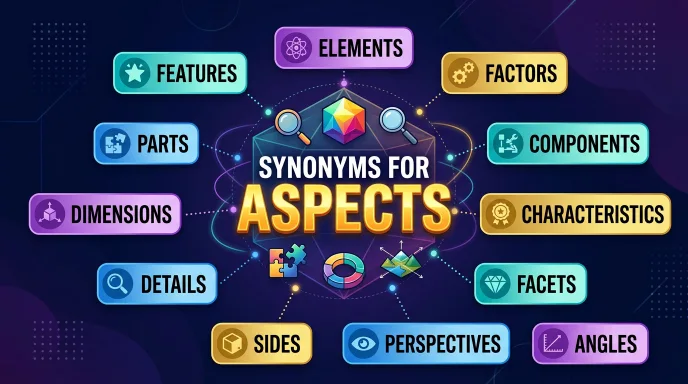
Synonyms for aspects include features, elements, factors, characteristics, facets, sides, parts, qualities, components, and dimensions. The word aspects usually refers to different parts, features, or sides of a subject, situation, or idea.
For example, a business can have financial, social, and operational aspects. The best synonym depends on the context. Features often describes noticeable qualities, while factors usually means things that influence an outcome.
Facets can describe different sides of a complex subject, while perspectives focuses on ways of viewing it. Learning synonyms for aspects can help students, writers, and English learners avoid repetition and express ideas more clearly.
Meaning of Aspects
Definition
Aspects is the plural form of aspect. It refers to particular parts, features, qualities, or sides of something.
For example, the sentence “We discussed several aspects of education” means that several different parts or areas of education were discussed.
Examples
- The report examines the environmental aspects of the project.
- We need to consider all aspects of the problem.
- The course covers several important aspects of English grammar.
Connotative Meaning
Aspects is a neutral word. It often suggests that a subject has several different parts or sides that can be examined separately.
The word can also suggest careful analysis. For example, “the social aspects of technology” focuses attention on one particular area of a larger topic.
Etymology
Aspect comes from Latin aspectus, meaning “a seeing, looking at, or appearance.” It is related to the Latin verb aspicere, meaning “to look at.”
Over time, aspect developed meanings connected with a particular side, feature, or way of considering something.
Pronunciation: US and UK IPA
- US: /ˈæspekts/
- UK: /ˈæspekts/
Syllables
As pects : 2 syllables.
Affixation Pattern
- Singular: aspect
- Plural: aspects
- Related word: aspectual
- Root connection: Latin aspicere, “to look at”
Related Concepts
- Feature: A noticeable part or quality.
- Element: One part of a larger whole.
- Factor: Something that influences a result.
- Facet: One side of a complex subject.
- Perspective: A particular way of viewing something.
- Dimension: A particular area or feature of a subject.
- Characteristic: A typical quality or feature.
Complete List of 25 Synonyms for Aspects
| Synonym | Meaning | Formality Level |
| 1. Features | Noticeable parts or qualities | Neutral |
| 2. Elements | Individual parts of a whole | Neutral |
| 3. Factors | Things that influence a result | Neutral |
| 4. Characteristics | Qualities that describe something | Formal |
| 5. Facets | Different sides of a complex subject | Formal |
| 6. Sides | Different parts or viewpoints | Neutral |
| 7. Parts | Sections or portions of something | Neutral |
| 8. Qualities | Particular traits or properties | Neutral |
| 9. Components | Parts that make up a whole | Formal |
| 10. Dimensions | Different areas or levels of a subject | Formal |
| 11. Perspectives | Particular ways of viewing something | Formal |
| 12. Viewpoints | Ways of thinking about something | Neutral |
| 13. Areas | Particular fields or parts of a subject | Neutral |
| 14. Details | Individual pieces of information | Neutral |
| 15. Attributes | Qualities or features of something | Formal |
| 16. Properties | Qualities or characteristics of something | Formal |
| 17. Points | Particular ideas or areas being considered | Neutral |
| 18. Considerations | Matters that need thought | Formal |
| 19. Angles | Particular ways of examining a topic | Neutral |
| 20. Traits | Distinguishing qualities | Neutral |
| 21. Features | Noticeable characteristics | Neutral |
| 22. Particulars | Specific details or facts | Formal |
| 23. Sections | Separate parts of a larger subject | Neutral |
| 24. View | A particular way of seeing something | Neutral |
| 25. Sides of the Issue | Different parts or viewpoints of a matter | Neutral |
Note: These words are not interchangeable in every sentence. For example, “factors” usually refers to influences, while “perspectives” refers to ways of viewing an issue.
Formality Comparison of Synonyms for Aspects
Formal Synonyms
These words work well in academic, professional, and analytical writing:
- Characteristics
- Facets
- Components
- Dimensions
- Perspectives
- Attributes
- Properties
- Considerations
- Particulars
Neutral Synonyms
These are common in everyday speech and general writing:
- Features
- Elements
- Factors
- Sides
- Parts
- Qualities
- Viewpoints
- Areas
- Details
- Points
- Angles
- Traits
- Sections
- View
Less Formal or Conversational Choices
In casual speech, people often use:
- Sides
- Parts
- Points
- Angles
- View
Detailed Synonyms for Aspects With Meanings and Examples
1. Features
Part of speech: Noun
US IPA: /ˈfiːtʃərz/
UK IPA: /ˈfiːtʃəz/
Meaning: Noticeable or important parts, qualities, or characteristics of something.
Formality: Neutral.
- Formal example: The study identifies several important features of modern education.
- Informal example: I like the new features of this app.
2. Elements
Part of speech: Noun
US IPA: /ˈeləmənts/
UK IPA: /ˈelɪmənts/
Meaning: Individual parts that combine to form something larger.
Formality: Neutral.
- Formal example: Trust is one of the key elements of a successful partnership.
- Informal example: There are several fun elements in the game.
3. Factors
Part of speech: Noun
US IPA: /ˈfæktərz/
UK IPA: /ˈfæktəz/
Meaning: Things that contribute to or influence a result.
Formality: Neutral.
- Formal example: Economic factors played an important role in the decision.
- Informal example: Several factors made me change my plans.
4. Characteristics
Part of speech: Noun
US IPA: /ˌkærəktəˈrɪstɪks/
UK IPA: /ˌkærəktəˈrɪstɪks/
Meaning: Qualities or features that describe a person, thing, or group.
Formality: Formal.
- Formal example: The research examines the main characteristics of successful leaders.
- Informal example: Patience is one of her best characteristics.
5. Facets
Part of speech: Noun
US IPA: /ˈfæsɪts/
UK IPA: /ˈfæsɪts/
Meaning: Different sides or parts of something complex.
Formality: Formal.
- Formal example: The book explores the political and cultural facets of the conflict.
- Informal example: There are many interesting facets of his personality.
6. Sides
Part of speech: Noun
US IPA: /saɪdz/
UK IPA: /saɪdz/
Meaning: Different parts, views, or ways of considering something.
Formality: Neutral.
- Formal example: The committee considered all sides of the issue.
- Informal example: There are two sides to every story.
7. Parts
Part of speech: Noun
US IPA: /pɑːrts/
UK IPA: /pɑːts/
Meaning: Separate sections or portions of something.
Formality: Neutral.
- Formal example: The report examines different parts of the education system.
- Informal example: I enjoyed the practical parts of the course.
8. Qualities
Part of speech: Noun
US IPA: /ˈkwɑːlətiz/
UK IPA: /ˈkwɒlətiz/
Meaning: Particular features or traits of a person or thing.
Formality: Neutral.
- Formal example: The study identifies qualities associated with effective leadership.
- Informal example: Kindness is one of his best qualities.
9. Components
Part of speech: Noun
US IPA: /kəmˈpoʊnənts/
UK IPA: /kəmˈpəʊnənts/
Meaning: Individual parts that make up a larger system or object.
Formality: Formal.
- Formal example: The researchers analyzed the main components of the system.
- Informal example: This machine has several important components.
10. Dimensions
Part of speech: Noun
US IPA: /dɪˈmenʃənz/
UK IPA: /dɪˈmenʃənz/
Meaning: Different areas, levels, or sides of a subject.
Formality: Formal.
- Formal example: The study explores the social and economic dimensions of poverty.
- Informal example: We need to think about the practical dimensions of the plan.
11. Perspectives
Part of speech: Noun
US IPA: /pərˈspektɪvz/
UK IPA: /pəˈspektɪvz/
Meaning: Particular ways of viewing or understanding something.
Formality: Formal.
- Formal example: The paper presents several perspectives on climate policy.
- Informal example: It is useful to hear different perspectives.
12. Viewpoints
Part of speech: Noun
US IPA: /ˈvjuːpɔɪnts/
UK IPA: /ˈvjuːpɔɪnts/
Meaning: Opinions or ways of thinking about an issue.
Formality: Neutral.
- Formal example: The debate included several opposing viewpoints.
- Informal example: We have different viewpoints on the subject.
13. Areas
Part of speech: Noun
US IPA: /ˈeriəz/
UK IPA: /ˈeəriəz/
Meaning: Particular parts or fields of a subject.
Formality: Neutral.
- Formal example: The report identifies several areas for improvement.
- Informal example: Math is one of my strongest areas.
14. Details
Part of speech: Noun
US IPA: /ˈdiːteɪlz/
UK IPA: /ˈdiːteɪlz/
Meaning: Small or specific pieces of information about something.
Formality: Neutral.
- Formal example: The report includes details about the project’s environmental impact.
- Informal example: Tell me the details of your trip.
15. Attributes
Part of speech: Noun
US IPA: /ˈætrəˌbjuːts/
UK IPA: /ˈætrɪbjuːts/
Meaning: Qualities or features that belong to something or someone.
Formality: Formal.
- Formal example: Reliability is one of the most important attributes of the system.
- Informal example: Confidence is one of her strongest attributes.
16. Properties
Part of speech: Noun
US IPA: /ˈprɑːpərtiz/
UK IPA: /ˈprɒpətiz/
Meaning: Qualities or characteristics of a substance, object, or system.
Formality: Formal.
- Formal example: The researchers examined the chemical properties of the material.
- Informal example: This fabric has useful properties for outdoor clothing.
17. Points
Part of speech: Noun
US IPA: /pɔɪnts/
UK IPA: /pɔɪnts/
Meaning: Particular ideas, matters, or parts of a discussion.
Formality: Neutral.
- Formal example: The report raises several important points about public health.
- Informal example: There are a few points I want to discuss.
18. Considerations
Part of speech: Noun
US IPA: /kənˌsɪdəˈreɪʃənz/
UK IPA: /kənˌsɪdəˈreɪʃənz/
Meaning: Matters that need to be thought about before making a decision.
Formality: Formal.
- Formal example: Financial considerations influenced the final decision.
- Informal example: Cost is an important consideration for me.
19. Angles
Part of speech: Noun
US IPA: /ˈæŋɡəlz/
UK IPA: /ˈæŋɡəlz/
Meaning: Particular ways of examining or presenting a subject.
Formality: Neutral.
- Formal example: The article examines the issue from several angles.
- Informal example: Let’s look at the problem from another angle.
20. Traits
Part of speech: Noun
US IPA: /treɪts/
UK IPA: /treɪts/
Meaning: Distinguishing qualities or characteristics.
Formality: Neutral.
- Formal example: Researchers identified several personality traits linked to leadership.
- Informal example: Honesty is one of his best traits.
21. Particulars
Part of speech: Noun
US IPA: /pərˈtɪkjələrz/
UK IPA: /pəˈtɪkjʊləz/
Meaning: Specific facts or details about something.
Formality: Formal.
- Formal example: The contract contains the particulars of the agreement.
- Informal example: I do not remember all the particulars of the conversation.
22. Sections
Part of speech: Noun
US IPA: /ˈsekʃənz/
UK IPA: /ˈsekʃənz/
Meaning: Separate parts of a larger document, subject, or object.
Formality: Neutral.
- Formal example: The report is divided into several sections.
- Informal example: I skipped a few sections of the book.
23. View
Part of speech: Noun
US IPA: /vjuː/
UK IPA: /vjuː/
Meaning: A particular way of thinking about or understanding something.
Formality: Neutral.
- Formal example: The article presents a different view of economic development.
- Informal example: I have a different view on the issue.
24. Sides of the Issue
Part of speech: Noun phrase
US pronunciation: /saɪdz əv ði ˈɪʃuː/
UK pronunciation: /saɪdz əv ði ˈɪʃuː/
Meaning: Different positions, parts, or viewpoints related to an issue.
Formality: Neutral.
- Formal example: The committee considered all sides of the issue before reaching a conclusion.
- Informal example: We should hear both sides of the issue first.
25. Features and Details
Part of speech: Noun phrase
US pronunciation: /ˈfiːtʃərz ænd ˈdiːteɪlz/
UK pronunciation: /ˈfiːtʃəz ænd ˈdiːteɪlz/
Meaning: Noticeable qualities together with specific information about something.
Formality: Neutral.
- Formal example: The report describes the main features and details of the proposed system.
- Informal example: The website shows all the features and details of the product.
Note: Some entries above are phrases or context based alternatives rather than exact dictionary synonyms. Use the simpler single word options when you need a direct replacement for “aspects.”
Prototype Meaning of Aspects
The central idea behind aspects is “different parts or sides of something that can be considered separately.”
Imagine a large subject such as education. Its aspects can include teaching methods, student performance, technology, costs, and social effects. Each is one part of the larger subject.
The most natural synonym changes with the context:
- Features = noticeable qualities
- Elements = parts of a whole
- Factors = things that influence an outcome
- Facets = different sides of a complex subject
- Perspectives = ways of viewing a subject
- Components = parts that form a system
- Considerations = matters that require thought
This distinction helps you choose the most accurate synonym for aspects.
Synonyms for Aspects by Category
Aspects Meaning Features
Use these when talking about qualities or noticeable characteristics:
- Features
- Characteristics
- Qualities
- Attributes
- Traits
- Properties
Aspects Meaning Parts
Use these when describing parts of a larger whole:
- Elements
- Components
- Parts
- Sections
- Areas
Aspects Meaning Different Sides
Use these when a subject has multiple sides or areas of discussion:
- Facets
- Sides
- Dimensions
- Angles
- Perspectives
- Viewpoints
Aspects Meaning Influences
Use these when discussing things that affect an outcome:
- Factors
- Considerations
- Elements
- Points
Aspects Meaning Specific Information
Use these when focusing on smaller or more specific information:
- Details
- Particulars
- Points
Antonyms of Aspects
There is no single perfect antonym for aspects because the word means “different parts or sides.” Depending on context, useful contrasting ideas include:
- Whole : the complete thing rather than one part.
- Totality : everything considered together.
- Unity : the state of forming one complete whole.
- Generalization : a broad idea rather than specific parts.
- Overview : a broad summary instead of individual details.
For example, “the aspects of the problem” focuses on individual parts, while “the whole problem” refers to the complete subject.
Quiz: Test Your Knowledge of Synonyms for Aspects
1. Which synonym for aspects means “things that influence an outcome”?
A. Facets
B. Factors
C. Details
D. Views
2. Which word means “different sides of a complex subject”?
A. Facets
B. Parts
C. Details
D. Traits
3. Which synonym means “noticeable qualities or characteristics”?
A. Features
B. Factors
C. Considerations
D. Perspectives
4. Which word is best for different ways of viewing an issue?
A. Components
B. Perspectives
C. Properties
D. Sections
5. Which word means “matters that need to be thought about”?
A. Features
B. Considerations
C. Traits
D. Qualities
6. Which word refers to parts that make up a larger system?
A. Components
B. Viewpoints
C. Angles
D. Particulars
Answer Key
- B : Factors
- A : Facets
- A : Features
- B : Perspectives
- B : Considerations
- A : Components
Usage Tips for Synonyms for Aspects
- Use features for noticeable qualities of a product, system, or thing.
- Use factors for things that influence a result or decision.
- Use facets for different sides of a complex subject.
- Use perspectives for different ways of viewing or understanding an issue.
- Use components for parts that form a larger system.
- Use considerations for matters that must be thought about before making a decision.
- Use details for small or specific pieces of information.
- Use characteristics when describing qualities that identify something.
The key is to match the synonym to the meaning you want. Do not replace aspects with a random synonym simply to avoid repetition.
FAQs About Synonyms for Aspects
1. What are the most common synonyms for aspects?
Common synonyms include features, elements, factors, characteristics, facets, sides, parts, qualities, and components. The best choice depends on the context.
2. What is a formal synonym for aspects?
Facets, dimensions, characteristics, components, perspectives, attributes, and considerations can work well in formal writing.
3. What is an easy synonym for aspects?
Parts and features are simple and common alternatives. They are easy for English learners to understand and use.
4. What is the difference between aspects and features?
Aspects can refer to different parts, sides, or areas of a subject. Features usually refers to noticeable qualities or characteristics.
5. What is the difference between aspects and factors?
Factors are things that influence a result. Aspects is broader and can refer to any important part or side of a subject.
6. Can I use facets instead of aspects?
Yes, in many contexts. Facets is especially useful when describing different sides of a complicated subject or issue.
7. What is the difference between aspects and perspectives?
Aspects are parts or sides of a subject. Perspectives are ways of viewing or understanding that subject.
8. What is the opposite of aspects?
There is no exact one word opposite. Depending on the sentence, whole, totality, or unity can contrast with the idea of individual aspects.
Conclusion
Learning synonyms for aspects gives you more ways to describe different parts, sides, qualities, and areas of a subject. Words such as features, elements, factors, characteristics, and facets are especially useful in everyday and academic English.
More specific words can make your writing even clearer. Use factors for influences, components for parts of a system, perspectives for ways of viewing an issue, and considerations for matters that require thought.
The word aspects itself is broad, so the best synonym depends on your exact meaning. By understanding these small differences, you can choose stronger vocabulary, avoid repetition, and make your writing more precise and natural.
Discover More Articles:

Hi, I’m Emma Collins, and I enjoy creating simple English vocabulary resources that make learning easier for everyone. I write about synonyms, antonyms, word meanings, vocabulary lists, and writing tips using clear, everyday language. My goal is to help students, writers, teachers, and English learners build their vocabulary, improve their writing, and feel more confident using English. I take time to research every article carefully so the information is accurate, practical, and easy to understand.