Have you ever written the word hate again and again? It can make your writing sound boring. Using different words can make your message stronger and more interesting.
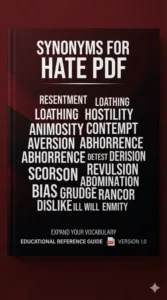
For example, a student may write, “I hate homework.” A blogger may want a better word to match the feeling. That is why many people search for a synonyms for hate PDF. A simple list can help you learn new words fast.
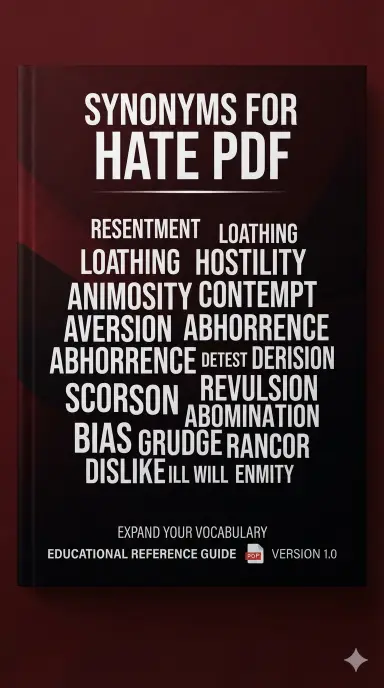
The phrase synonyms for hate PDF means a printable list of words that have a similar meaning to hate. It is useful for students, bloggers, content writers, and anyone learning English. A good synonyms for hate PDF makes writing, speaking, and reading much easier.
List of Synonyms for Hate PDF
Loathe
Meaning:
To dislike someone or something very strongly.
Examples:
- I loathe waking up early on Sundays.
- She loathes the smell of spoiled milk.
Detest
Meaning:
To hate something very much.
Examples:
- They detest cheating in games.
- I detest dirty dishes in the sink.
Despise
Meaning:
To feel strong dislike and no respect.
Examples:
- He despises people who lie.
- We despise unfair rules.
Abhor
Meaning:
To hate something because it feels very wrong.
Examples:
- She abhors violence.
- Many people abhor cruelty to animals.
Dislike
Meaning:
To not enjoy or like something.
Examples:
- I dislike cold coffee.
- He dislikes waiting in long lines.
Resent
Meaning:
To feel upset because something seems unfair.
Examples:
- She resents being ignored.
- They resent unfair treatment.
Scorn
Meaning:
To show that you think someone or something is not worthy of respect.
Examples:
- He scorned the rude comment.
- She looked at the lie with scorn.
Reject
Meaning:
To refuse to accept or welcome something.
Examples:
- I reject bad advice.
- They rejected the unfair offer.
Disdain
Meaning:
To think someone or something is not good enough.
Examples:
- She spoke with disdain.
- He showed disdain for dishonesty.
Spurn
Meaning:
To refuse something in a cold way.
Examples:
- He spurned the fake apology.
- She spurned the unfair deal.
Oppose
Meaning:
To be against something.
Examples:
- Many people oppose bullying.
- We oppose unfair rules.
Object To
Meaning:
To say that you do not agree with something.
Examples:
- I object to loud music at night.
- She objected to the new rule.
Disapprove
Meaning:
To think something is wrong or not good.
Examples:
- My parents disapprove of lying.
- The teaCondemn
Meaning:
To say that something is very wrong.
Examples:
- Many people condemn bullying.
- The coach condemned cheating.
Denounce
Meaning:
To speak against something in public.
Examples:
- They denounced the unfair decision.
- She denounced the false story.
Revile
Meaning:
To speak about someone with strong hate.
Examples:
- He reviled the cruel leader.
- They reviled the dishonest man.
Vilify
Meaning:
To say very bad things about someone.
Examples:
- Some people vilified the referee online.
- She was vilified for her mistake.
Abominate
Meaning:
To hate something very deeply.
Examples:
- I abominate rude behavior.
- They abominate violence.
Feel Hostile Toward
Meaning:
To have angry or unfriendly feelings toward someone.
Examples:
- He feels hostile toward his old rival.
- They felt hostile toward the unfair team.
Be Revolted By
Meaning:
To feel very shocked or disgusted by something.
Examples:
- She was revolted by the dirty room.
- We were revolted by the cruel act.
Be Disgusted By
Meaning:
To feel strong dislike because something is unpleasant.
Examples:
- I am disgusted by littering.
- They were disgusted by the bad smell.
Be Sick Of
Meaning:
To be tired of something because it happens too often.
Examples:
- I am sick of waiting.
- She is sick of noisy neighbors.
Be Fed Up With
Meaning:
To be very tired or annoyed by something.
Examples:
- We are fed up with the traffic.
- He is fed up with excuses.
Have No Use For
Meaning:
To dislike or not value someone or something.
Examples:
- She has no use for gossip.
- I have no use for fake promises.
Hold in Contempt
Meaning:
To have no respect for someone.
Examples:
- They hold dishonest people in contempt.
- He held the bully in contempt.
Look Down On
Meaning:
To think someone is less important than you.
Examples:
- Never look down on others.
- She looked down on no one.
- cher disapproved of cheating.
Shun
Meaning:
To stay away from someone or something.
Examples:
- They shun negative people.
- I shun unhealthy habits.
Avoid
Meaning:
To stay away from something on purpose.
Examples:
- She avoids loud places.
- We avoid bad company.
Ignore
Meaning:
To pay no attention to someone or something.
Examples:
- He ignored the rude comment.
- I ignore online trolls.
Boycott
Meaning:
To refuse to use or support something.
Examples:
- Many people boycotted the product.
- They boycotted the unfair event.
Snub
Meaning:
To ignore someone in an unfriendly way.
Examples:
- She snubbed his greeting.
- He snubbed the rude guest.
Spite
Meaning:
To show hate or a wish to upset someone.
Examples:
- He spoke out of spite.
- She smiled despite their spite.
Malice
Meaning:
A wish to hurt someone.
Examples:
- His words were full of malice.
- She acted without malice.
Animosity
Meaning:
Strong anger or dislike between people.
Examples:
- There was animosity between the teams.
- Old animosity faded with time.
Hostility
Meaning:
Unfriendly or angry behavior.
Examples:
- The crowd showed hostility.
- His hostility surprised everyone.
Antipathy
Meaning:
A strong feeling of dislike.
Examples:
- She felt antipathy toward dishonesty.
- His antipathy was easy to see.
Bitterness
Meaning:
Deep anger that lasts a long time.
Examples:
- He spoke with bitterness.
- She let go of her bitterness.
Ill Will
Meaning:
Unfriendly feelings toward someone.
Examples:
- There was no ill will after the game.
- She wished him well without ill will.
Enmity
Meaning:
A state of deep hate between people or groups.
Examples:
- Years of enmity finally ended.
- TheGreat! Here is Part 4 with synonyms 40–50, the conclusion, and the meta description.
Rancor
Meaning:
Deep anger and hate that lasts a long time.
Examples:
- He spoke with rancor.
- She let go of old rancor.
Aversion
Meaning:
A strong dislike of something.
Examples:
- I have an aversion to smoke.
- She has an aversion to loud noise.
Repugnance
Meaning:
A strong feeling that something is unpleasant or wrong.
Examples:
- He felt repugnance at the mess.
- They showed repugnance toward cruelty.
Revulsion
Meaning:
A sudden strong feeling of disgust.
Examples:
- She felt revulsion at the smell.
- We reacted with revulsion.
Disgust
Meaning:
A strong feeling of dislike.
Examples:
- He felt disgust after the lie.
- She spoke with disgust.
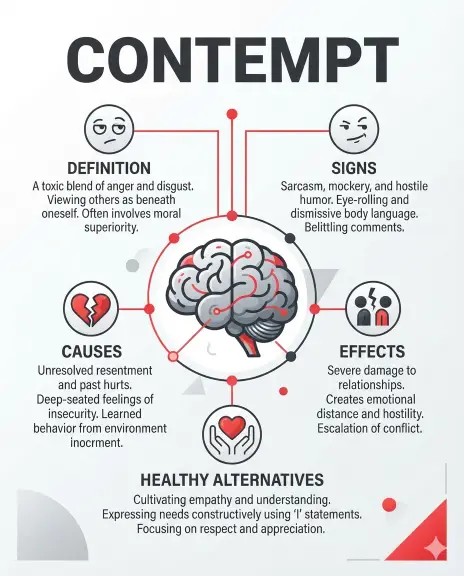
Contempt
Meaning:
A feeling that someone is not worthy of respect.
Examples:
- He looked at the cheat with contempt.
- She felt contempt for dishonesty.
Hatred
Meaning:
A very strong feeling of hate.
Examples:
- Hatred can hurt people.
- He carried hatred for years.
Loathing
Meaning:
A very strong feeling of dislike.
Examples:
- She felt loathing for bullying.
- His loathing was clear.
Detestation
Meaning:
Strong hate toward someone or something.
Examples:
- He expressed detestation for lies.
- They felt detestation toward cruelty.
Abhorrence
Meaning:
Strong hate because something seems very wrong.
Examples:
- She felt abhorrence toward violence.
- Many people share that abhorrence.
Odium
Meaning:
Strong public dislike or hate.
Examples:
- The decision brought odium.
- He faced public odium.
Conclusion
Learning different words for hate can make your writing stronger and more interesting. These synonyms help students write better essays, bloggers create engaging posts, and English learners speak with more confidence.
Try using these words in emails, school assignments, stories, and daily conversations. The more you practice, the easier it becomes to choose the perfect word for every sit.
Discover More Articles:

Hi, I’m Nabeel Hassan, an English vocabulary writer helping learners improve their word skills with easy synonyms, meanings, examples, and quizzes. I create simple resources to make English learning easier and more effective.